The Science Behind Pixar exhibit encourages child curiosity in STEAM
A few weeks ago, my kids were off from school so I took them to check out The Science Behind Pixar at the Franklin Institute. It was the perfect activity to do on a non-school day. We were curious to learn how the Pixar wizards use science, technology, engineering and math (STEM) to create their films.
The exhibition consists of eight sections to give both children and adults a “behind the scenes” look into the production pipeline used at Pixar daily. You get the chance to create your own short animations, light a scene starring Dory and learn how Disney characters are built from wireframes to finished animation.
What I found most fascinating was the opportunity to learn about the jobs filmmakers do every day and how they tackle problems. It was an enlightening demonstration of how creativity and imagination is involved in the STEAM concepts essential to the filmmaking process.
A few sections of the exhibit:
Modeling: Artists create sketches and clay sculptures called maquettes to design each character. A digital modeler creates a virtual 3D model of the character, sometimes digitally scanning the maquette. The created model is a virtual digital wireframe of points and edges that connect them.
Rigging: Riggers create rigs for models. Rigs specify the relationships between body parts so that bending a knee will raise the foot, but not move the hands. We learned that a rig defines a sequence of reactions. For example, when a hand clenches, muscles in the arm flex and the skin draws tight.
My kids enjoyed selecting a rig to define arm motion and using a rig to create expressions.
Sets and cameras: The setting of each scene and the way each image is framed convey the context, story, and emotion. Set designers build virtual environments from the ground up. Camera artists use virtual cameras to shape what is on screen. They select the composition, camera movement, and lens type to support the film.
We explored how cameras frame a scene. We selected a camera (focus distance and field of view) and used the cameras to tell a story. The order of a camera selection affects the feel of a scene.
Lighting: Light enhances the emotional feel of each scene. Pixar’s lighting designers define virtual lights in the computer. The color, position, and intensity of each light needs to be programmed to achieve the desired artistic effect.
We had fun adjusting virtual lights to change the feel of a scene.
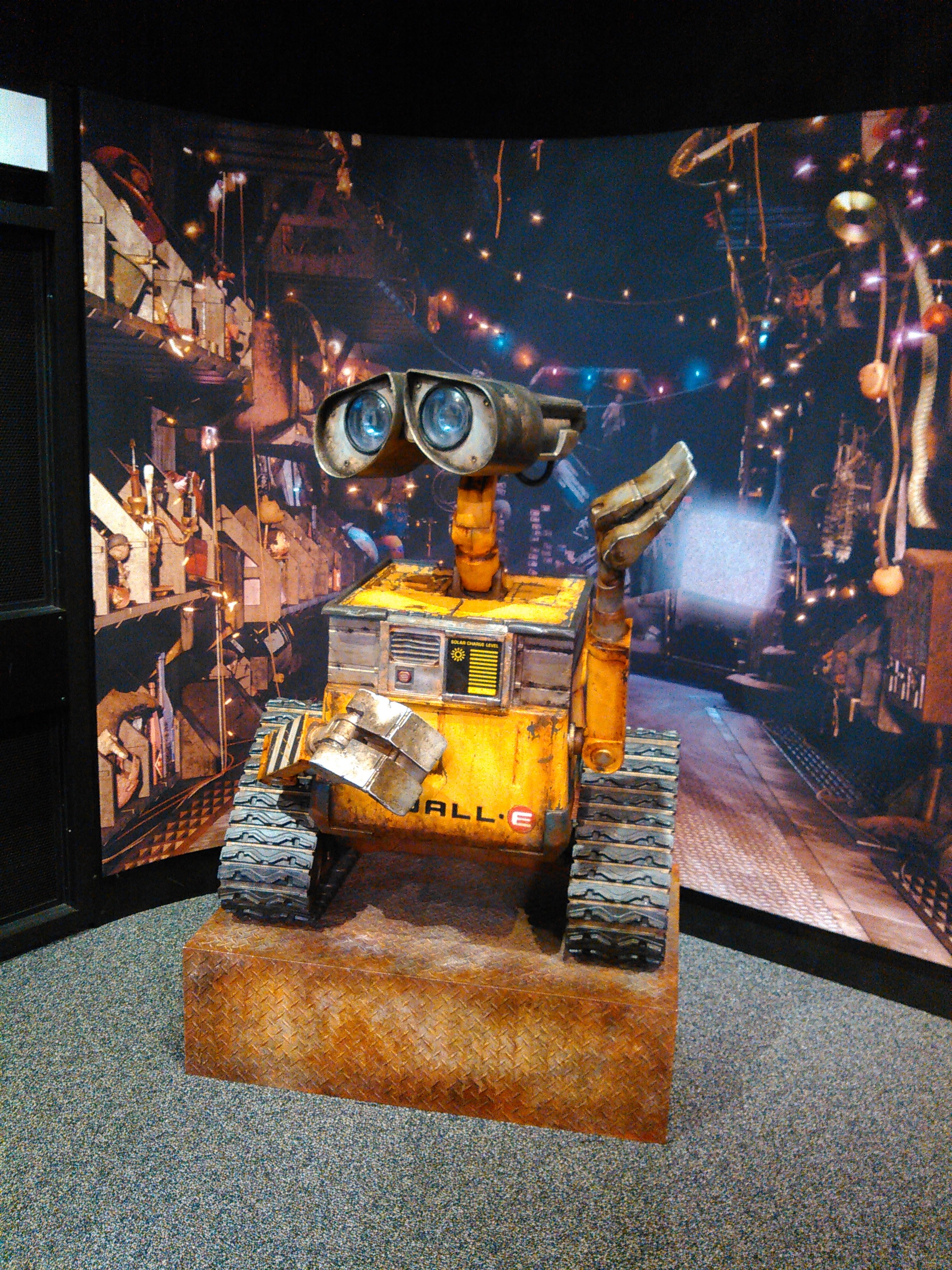
My kids enjoyed coming face-to-face with re-creations of Pixar film characters like Buzz Lightyear, Dory, Mike and Sulley, and WALL-E. Before leaving the exhibit, don’t forget to take a selfie with Buzz Lightyear or Wall-E (#ScienceOfPixar).
If you would like to purchase tickets to The Science Behind Pixar, use discount promo code MBPIXAR* to receive $5.00 off up to 4 adult, daytime tickets to The Science Behind Pixar. #partner
Disclaimer “*$5 off Daytime Adult Admission tickets to The Science Behind Pixar. Limit 4 tickets per person. Includes General Admission to The Franklin Institute. Cannot be combined with any other offer or discount. Upgrades available on-site for IMAX and 3D Theater. Redeemable online or over the phone. Processing fees apply when ordering tickets in advance. Excludes holidays. Valid through 8/28/16”